
Beyond capacity: what pharmaceutical companies should expect from their CDMO
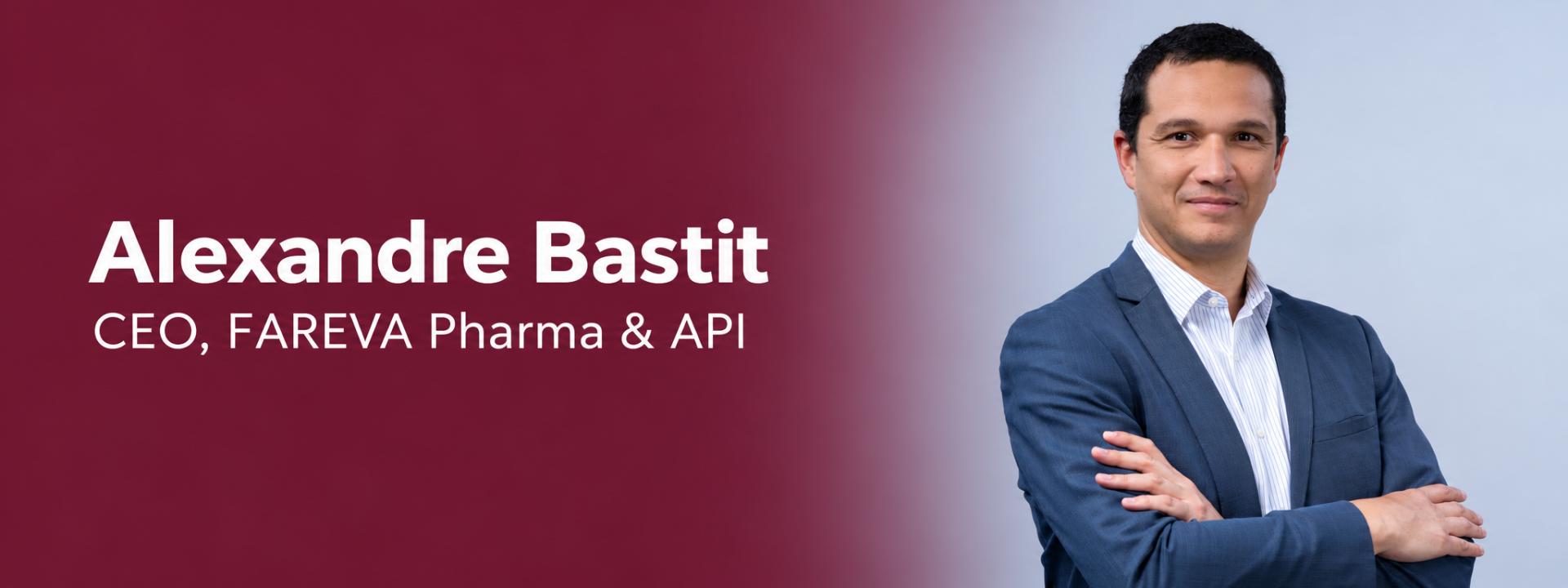
By Alexandre Bastit, CEO, FAREVA Pharma & API
When I speak with pharmaceutical leaders today, the conversation is no longer only about manufacturing capacity or price. Increasingly, it is about risk, speed, complexity and confidence.
Can my supply chain withstand disruption? Can I bring my product to market faster? Can my manufacturing partner support increasingly complex technologies? And, perhaps most importantly, can that partner evolve with my product from its earliest industrial stages through to commercial production?
These questions reflect a profound shift in our industry.
Scientific innovation is accelerating. Regulatory expectations continue to rise. Supply chains are being reassessed in light of geopolitical uncertainty. At the same time, biotech companies are bringing forward a new generation of increasingly targeted and complex therapies.
In this environment, I believe the role of a CDMO must evolve.
Manufacturing capacity remains essential. But capacity alone is no longer enough.
Our responsibility is increasingly to help pharmaceutical companies manage complexity, anticipate industrial challenges and secure their products throughout their life cycle.
This conviction is at the heart of the transformation we are pursuing at FAREVA.
1. Building resilience in an increasingly uncertain world
Resilience has become one of the most important topics in pharmaceutical manufacturing.
Recent years have reminded our industry that manufacturing strategy cannot be separated from geography, supply chains or geopolitical risk. Pharmaceutical companies increasingly need to understand not only who can manufacture their products, but where, with what alternatives and with what ability to respond when circumstances change.
For CDMOs, having a broad industrial footprint therefore creates value only if that network provides customers with genuine options. At FAREVA, we operate 42 industrial sites worldwide, including 17 dedicated to our Pharma & API activities. Our objective is not simply to increase the size of that footprint. It is to use it to offer our customers greater flexibility, proximity to their markets and more resilient industrial solutions.
Our recent acquisition of the Lüleburgaz site in Türkiye illustrates this approach.
The site brings significant capabilities across oral solid dosage forms, liquids, semi-solids and sterile products, alongside dedicated production lines for penicillins and cephalosporins. With an annual production capacity of 445 million packs and a strategic location serving Europe, the Middle East and emerging markets, it gives our customers additional industrial and geographic options. For me, this is an important evolution of the CDMO model.
Our industrial footprint must not simply represent capacity. It must provide optionality and resilience.
2. Combining global scale with local agility
As CDMOs grow, however, another challenge emerges.
How do you benefit from the scale, expertise and resources of an international organisation without creating additional complexity for customers?
I do not believe we should have to choose between scale and agility.
The challenge is to deliver both.
FAREVA has historically developed through a decentralised model, with strong local teams and decision-making close to customers and operations. I see that entrepreneurial culture as an important strength.
But scale also creates a responsibility: wherever a project is managed within our network, customers must be able to rely on the same commitment to quality, safety and industrial performance.
This is why we are strengthening the way expertise and best practices are shared across our Pharma & API organisation.
We have reinforced our governance around Quality, Safety and Operational Excellence, including the appointment of Florent Vallet as Senior Vice President Industrial Strategy & Performance. His cross-functional responsibility is to help our sites share expertise, strengthen common standards and continuously improve industrial performance.
The objective is not to centralise everything.
It is to combine the responsiveness of local organisations with the robustness of a global industrial network.
That balance between proximity and scale is, in my view, becoming one of the key differentiators in our industry.
3. Making industrial complexity simpler for customers
There is another consequence of growing technological complexity: pharmaceutical companies increasingly need access to highly specialised expertise.
But customers should not have to understand the internal organisation of their CDMO in order to find it.
One principle is particularly important to me:
Industrial complexity should never become customer complexity.
When a company approaches us with a project, the starting point should not be the manufacturing site we want to fill. It should be the product and what it needs to succeed.
What technology is required? What expertise? What regulatory environment? What development pathway? What scale today — and potentially tomorrow?
Only then should we identify the best combination of capabilities within our network.
This philosophy has guided the evolution of our commercial organisation.
Our teams are increasingly structured around therapeutic areas, technologies and service offerings, allowing us to bring the relevant expertise into customer discussions earlier and coordinate capabilities across different sites.
We have also created a dedicated Prospection Hub to improve how we identify and qualify new projects and connect opportunities with the appropriate expertise across FAREVA.
The internal organisation itself is not what matters to the customer.
What matters is faster access to the right people, clearer decisions and a simpler journey through an increasingly complex industrial environment.
4. Investing today for the therapies of tomorrow
A CDMO also has a responsibility to anticipate.
Industrial capabilities cannot be created overnight. By the time a new therapeutic area reaches significant commercial demand, the infrastructure, expertise and regulatory capabilities required to manufacture it may have taken years to develop.
We therefore have to look beyond current demand and understand where science and patient needs are moving.
At FAREVA, this is guiding our investment priorities in areas including sterile products, injectables, biologics and ophthalmology.
Ophthalmology provides a good example.
Ageing populations, the increasing prevalence of chronic eye diseases and the emergence of new therapies are creating growing demand for specialised sterile manufacturing.
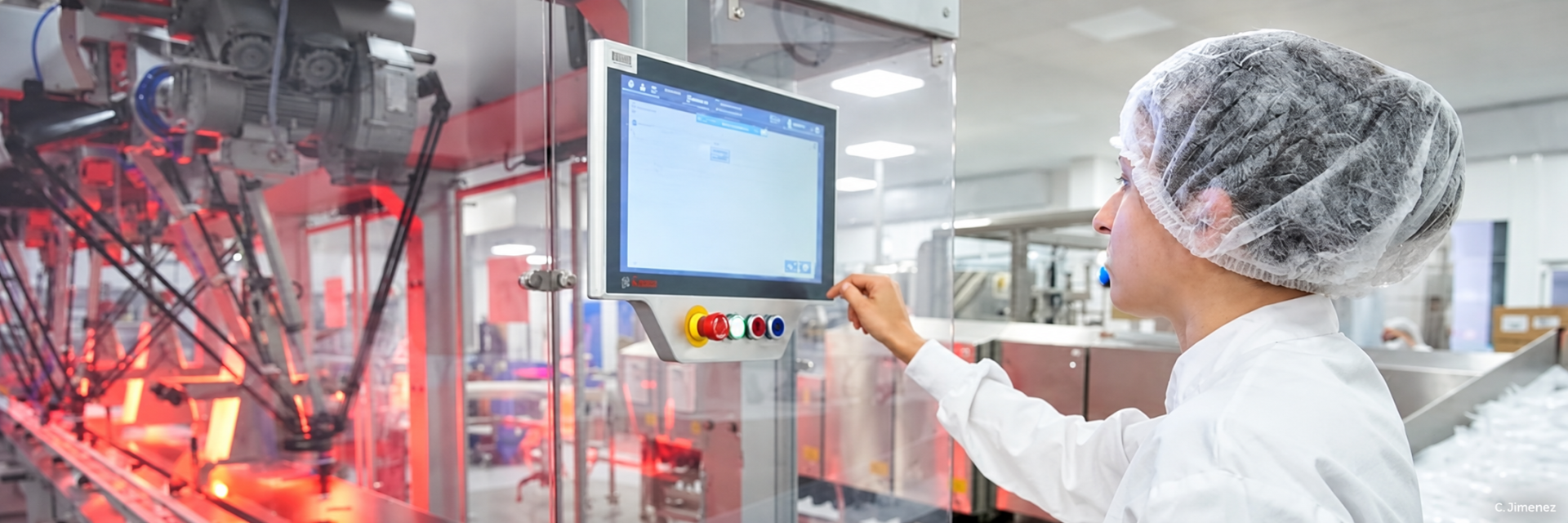
To anticipate these needs, we have invested €70 million at our Mirabel site in new production capabilities dedicated to single-dose and multi-dose sterile forms.
The objective is not simply to add capacity.
It is to build industrial platforms capable of supporting customers over time, as their products progress from initial industrialisation to larger-scale commercial manufacturing.
For me, this ability to anticipate future needs is fundamental to the partnership we want to build with our customers.
5. Supporting innovation earlier
This is particularly true for biotech companies.
Many of the therapies that could transform patient care tomorrow are being developed by organisations with outstanding scientific expertise but without the intention — or the need — to build extensive industrial infrastructure themselves. For these companies, the CDMO decision can therefore become strategic much earlier.
They are not simply selecting a manufacturer. They are selecting a partner that may need to help secure the process, manufacture clinical batches, prepare industrial transfers, manage scale-up and ultimately support commercial production.
Our role is to make that journey as seamless as possible. Within FAREVA, our Pau, Farméa and Excella sites provide pilot capabilities designed to support pharmaceutical development phases, clinical trials and first industrial launches. Development, industrialisation, quality and manufacturing teams can work together from the earliest stages of a project.
This continuity matters.
Every transfer between partners introduces potential complexity, time and risk. When we can support a project from its early industrial stages through to commercial manufacturing, we can reduce those transitions and create a clearer path towards market.
For innovative companies, the value of a CDMO increasingly lies not only in what it can manufacture today, but in how far it can accompany a product tomorrow.
6. Integrating sustainability into industrial performance
The definition of industrial performance itself is also changing.
Quality, cost and delivery remain fundamental. But increasingly, our customers also want to understand the environmental footprint of their manufacturing partners, their energy strategy, their sourcing practices and their ability to contribute to their own sustainability commitments.
For that reason, I do not see sustainability as a separate corporate agenda.
It is becoming part of industrial performance.
At FAREVA, our climate strategy is aligned with the Science Based Targets initiative. We are targeting a 42% reduction in Scope 1 and 2 greenhouse gas emissions and a 25% reduction in Scope 3 emissions, alongside increasing the share of low-carbon electricity across our operations.
Our responsibility is of course to reduce our own impact.
But as a CDMO, it goes further: the choices we make in our plants, our energy consumption, our procurement and our supply chain ultimately contribute to the environmental footprint of our customers' products.
Sustainable performance therefore needs to become part of the value we deliver as an industrial partner.
From manufacturing capacity to industrial partnership
The pharmaceutical industry will continue to become more complex.
Therapies will become more specialised. Regulatory requirements will continue to evolve. Supply chains will remain under pressure. And pharmaceutical companies will continue to look for ways to bring innovation to patients faster while managing industrial risk.
In that environment, I believe the relationship between pharmaceutical companies and CDMOs will become increasingly strategic.
The question is no longer simply: “Can you manufacture my product?”
It is increasingly:
“Can you understand my project, anticipate its industrial challenges and grow with it?”
This is the direction we are taking at FAREVA.
Our ambition is to combine the strengths that have shaped our Group — entrepreneurial agility, proximity to our customers and strong industrial expertise — with the capabilities of an international network able to support increasingly complex pharmaceutical projects.
For me, the future of the CDMO model lies precisely in this combination:
- Global scale with local agility.
- Industrial excellence with entrepreneurial responsiveness.
- Specialised expertise with an integrated customer journey.
- Capacity for today with the ability to anticipate tomorrow.
Ultimately, our role is not simply to manufacture products.
It is to give our customers the industrial confidence they need to focus on what matters most: bringing their therapies to patients.
Looking for a partner to support your next pharmaceutical project?
Tell us about your needs and explore how FAREVA Pharma & API can support you.